Tree service
Professional tree removal, stump grinding, and related services across the Denver metro area and beyond.
Explore Tree service
Boulder's soil is a shallow layer of compact clay over dense clay subsoil, with rock mixed in, especially in properties near the Flatirons and the foothills to the west. Freeze-thaw cycles hit hard here through late spring, heaving roots and loosening stumps in ways that differ from the flatter Denver metro. Properties in neighborhoods like North Boulder, Chautauqua, and South Boulder often sit on sloped terrain where stump grinding requires careful equipment positioning. Boulder County also has specific rules around removing certain tree species near waterways and open space corridors.
Boulder, CO
CO Service Area
Communities we serve
Boulder, CO
Tree Service
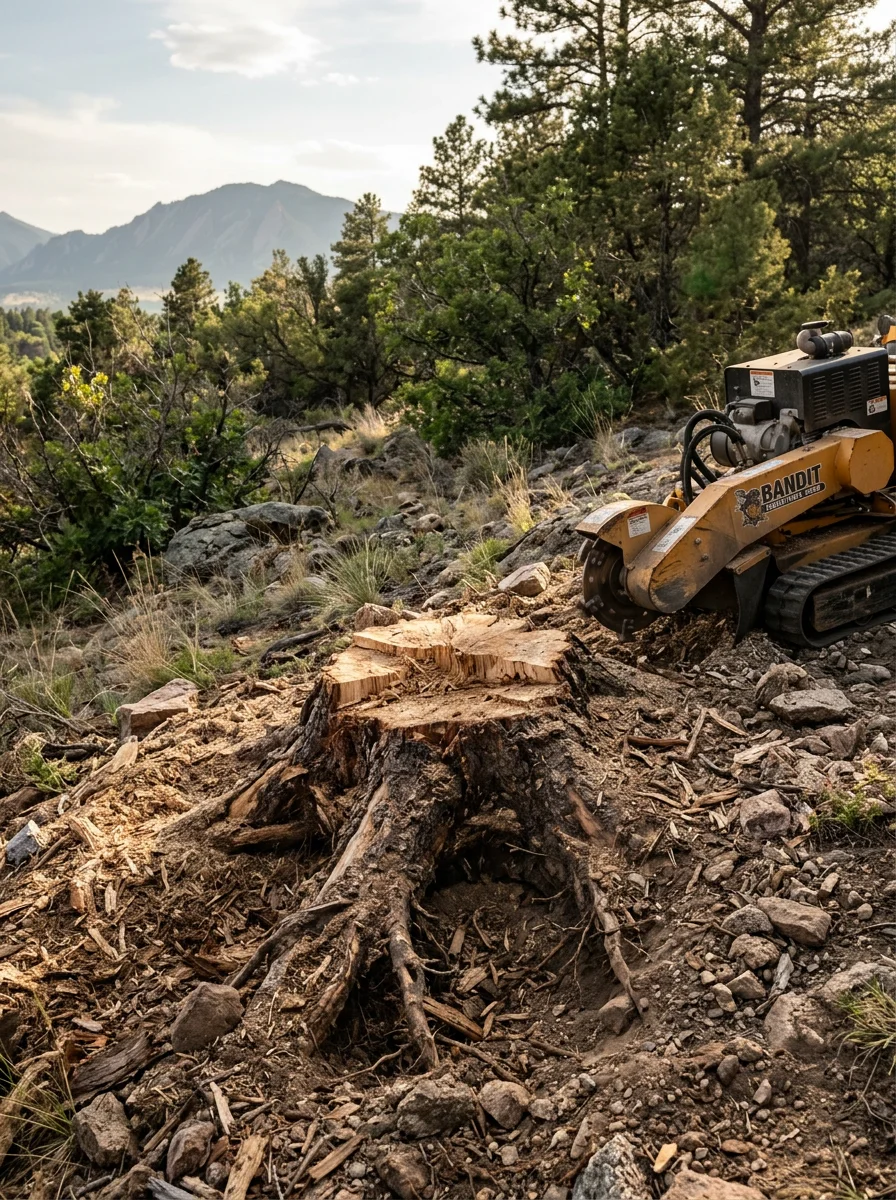
Boulder's soils are typically a thin layer of compact clay sitting over very dense clay subsoil, with rocks throughout. That combination makes stump grinding slower and harder on equipment than in areas with looser ground. Properties near the foothills in neighborhoods like Chautauqua and Mapleton Hill often have stumps anchored in this rocky clay mix, which affects how deep a grinder can work efficiently.
Freeze-thaw cycles in Boulder run longer into spring than in the lower-elevation Denver suburbs. That repeated freezing and thawing loosens the soil around root systems, which can actually make early-spring stump removal easier. However, it also means roots near the surface can shift and crack hardscaping over winter, making removal more urgent for homeowners with stumps near driveways or patios.
Wind events off the Flatirons are a real factor for tree health on west-facing Boulder properties. Trees that have been stressed by drought or root competition in the rocky soil are more vulnerable to these gusts. After a tree comes down, the stump and exposed root system need to be addressed before the area can be replanted or landscaped, and sloped lots require equipment that can be safely positioned on uneven ground.
At a glance
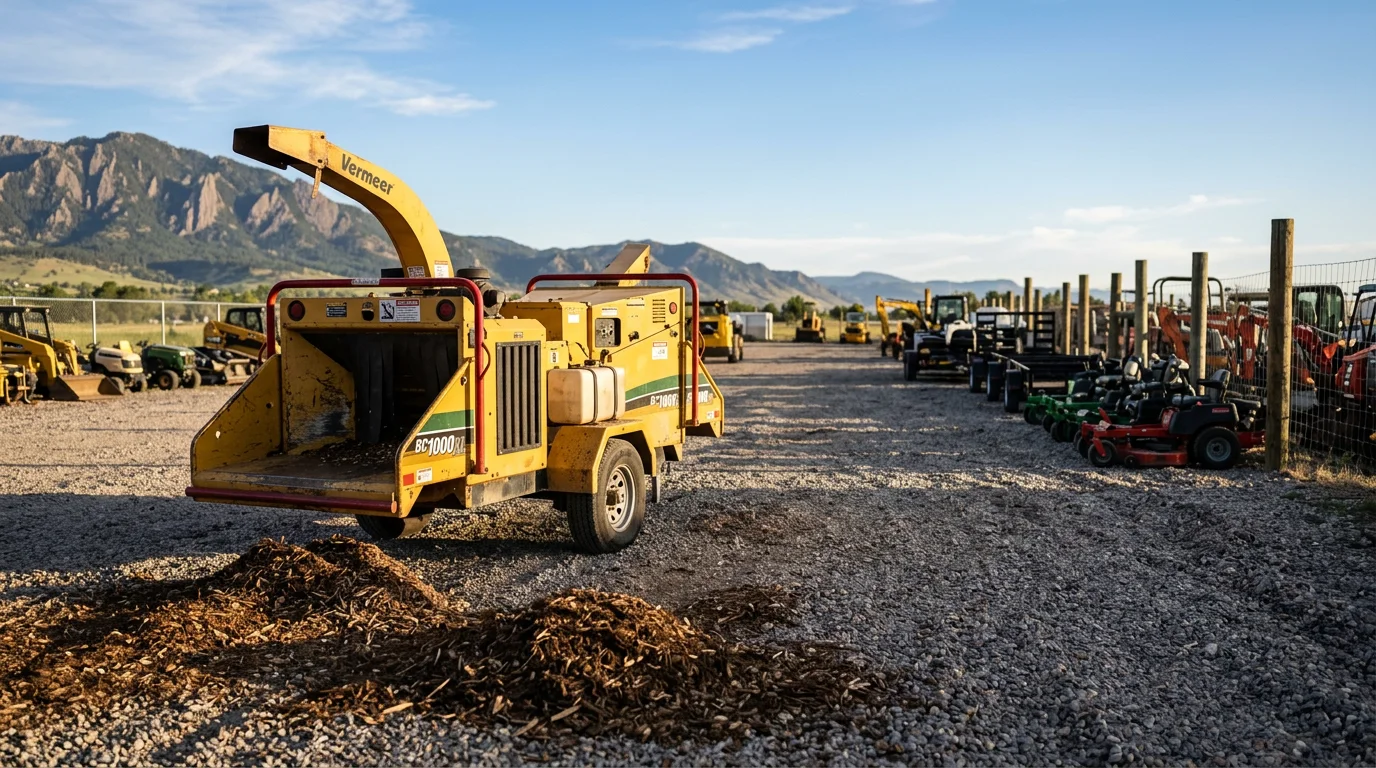
Tree stump removal in Boulder often involves stumps left by mature ponderosa pines, blue spruces, and cottonwoods on properties that back up to open space or sit on sloped foothill terrain. Tree removal services are frequently needed after wind events that come off the Flatirons, which can topple trees on west-facing lots in Chautauqua and Mapleton Hill. Tree companies operating in Boulder and surrounding areas also use our 12-inch wood chipper rental to process material on-site rather than hauling it to a disposal facility.
Professional tree removal, stump grinding, and related services across the Denver metro area and beyond.
Efficient removal and disposal of tree debris, brush, and yard waste from residential and commercial properties.
Wood chipper rental and equipment for tree companies, contractors, and property owners.
Reviews are temporarily unavailable. Please check back soon.
Worked with us?
Leave a Review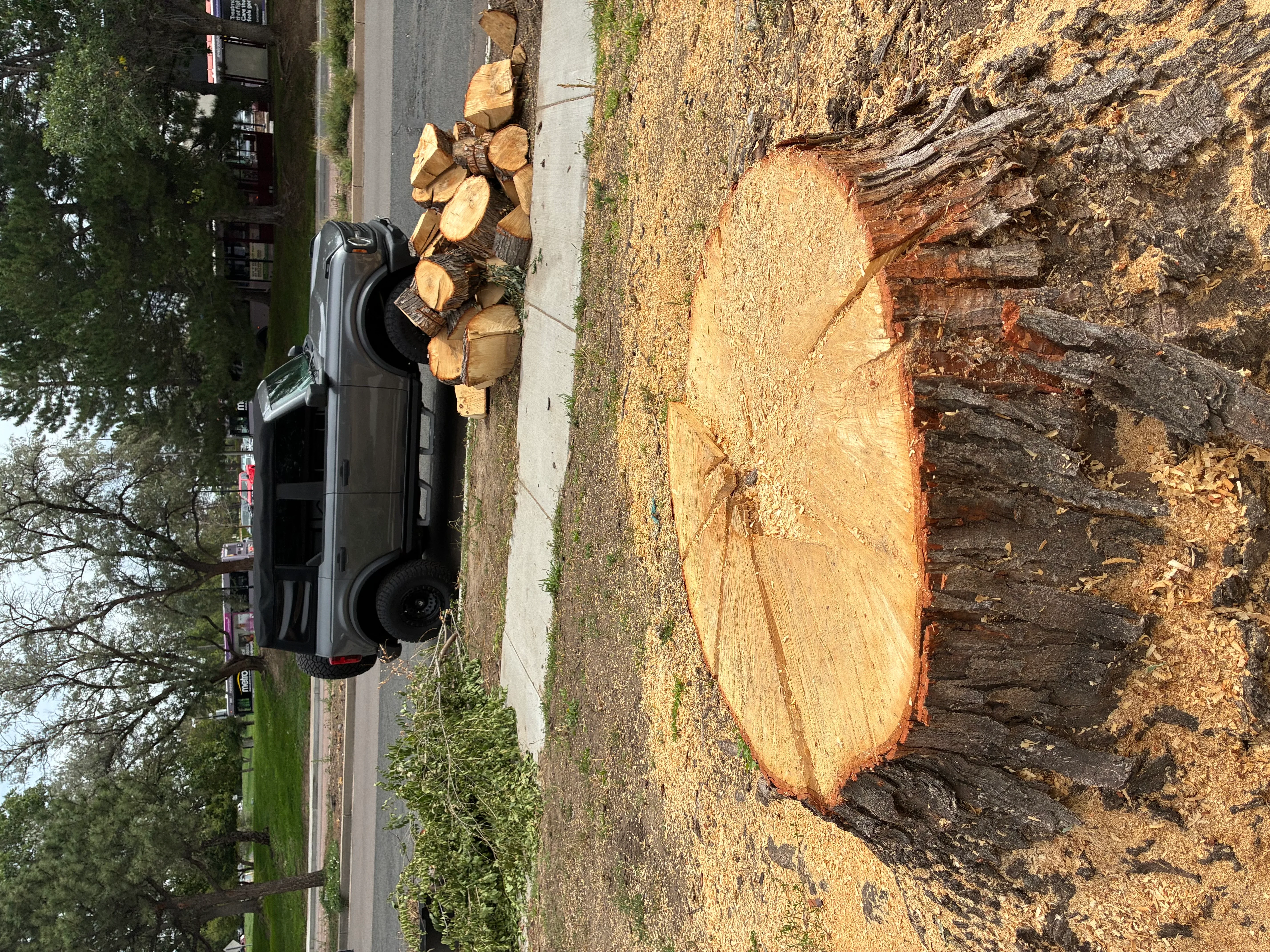 Tree service
  Tree service
  Tree service
 Serving Boulder, CO
Our crew knows Boulder, CO. We will show up on time, assess the job honestly, and give you a clear written number before asking you to decide anything.
Also serving across the Denver metro and Front Range:
Common questions from Boulder, CO customers about our services, process, and coverage.
Boulder County has specific ordinances around removing certain tree species near waterways and open space boundaries. Native cottonwoods near creeks and some other species may require approval before removal. Checking with the City of Boulder's forestry department before starting any stump removal project near open space or creek corridors is the right first step.
Boulder's soil is typically a shallow layer of compact clay over dense clay subsoil with rocks mixed throughout, especially on properties near the foothills. Rock in the grinding path slows the process and can limit how deep the grinder can work in a single pass. Stumps in these conditions may require more time than a similar-sized stump in looser soil.
Yes, but equipment positioning on sloped lots in neighborhoods like Chautauqua and Mapleton Hill requires more planning than on flat ground. The grinder needs stable footing and clear access to the stump. Steep or narrow access points may limit which machine size can be used safely on a given property.
Ponderosa pines and blue spruces common on foothill-adjacent Boulder properties have dense, resinous wood that resists grinding more than softer species. Cottonwoods near Boulder Creek and other waterways have wide, shallow root systems that spread well beyond the visible stump. Both species require attention to the root spread, not just the stump itself.
Call us directly. Real answers, no scripts.
Stop by, call, or book online — we're always nearby when you need us.
Phone
(720) 481-9085Hours